
PDF Download The Bible Unearthed: Archaeology's New Vision of Ancient Israel and the Origin of Its Sacred Texts, by Neil Asher Silberman Israel Finkelstein
Knowing the way the best ways to get this book The Bible Unearthed: Archaeology's New Vision Of Ancient Israel And The Origin Of Its Sacred Texts, By Neil Asher Silberman Israel Finkelstein is also useful. You have actually remained in right website to begin getting this details. Obtain the The Bible Unearthed: Archaeology's New Vision Of Ancient Israel And The Origin Of Its Sacred Texts, By Neil Asher Silberman Israel Finkelstein web link that we provide right here and also go to the link. You can buy the book The Bible Unearthed: Archaeology's New Vision Of Ancient Israel And The Origin Of Its Sacred Texts, By Neil Asher Silberman Israel Finkelstein or get it as quickly as possible. You could promptly download this The Bible Unearthed: Archaeology's New Vision Of Ancient Israel And The Origin Of Its Sacred Texts, By Neil Asher Silberman Israel Finkelstein after obtaining deal. So, when you require the book rapidly, you can straight receive it. It's so very easy therefore fats, isn't it? You need to choose to by doing this.
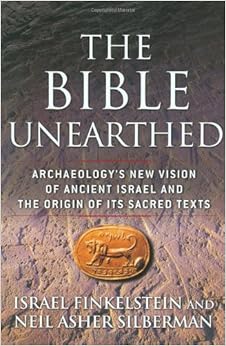
The Bible Unearthed: Archaeology's New Vision of Ancient Israel and the Origin of Its Sacred Texts, by Neil Asher Silberman Israel Finkelstein

PDF Download The Bible Unearthed: Archaeology's New Vision of Ancient Israel and the Origin of Its Sacred Texts, by Neil Asher Silberman Israel Finkelstein
After couple of time, lastly guide that we and you await is coming. So relieved to get this fantastic publication offered to provide in this site. This is the book, the DDD. If you still feel so tough to obtain the published book in the book shop, you could join with us once more. If you have ever got guide in soft data from this book, you can easily get it as the reference currently.
After getting such information from us about this book what should you do? One more time, this is an ideal publication that is composed particularly for you, the individual that enjoys reading a lot. You are the visitors with large inquisitiveness and also you will not quit of a book. The Bible Unearthed: Archaeology's New Vision Of Ancient Israel And The Origin Of Its Sacred Texts, By Neil Asher Silberman Israel Finkelstein really what you require currently. You may not be strange with this title of guide, may not you? It is not the time that you will give up to end up. You could complete it each time you desire.
The Bible Unearthed: Archaeology's New Vision Of Ancient Israel And The Origin Of Its Sacred Texts, By Neil Asher Silberman Israel Finkelstein as one of the referred publications that we will provide in this web site has actually been analyzed to be one legitimate source. Also this subject is common, the way just how writer makes it is extremely appealing. It can attract individuals who have not feels for checking out to begin reading. It will make someone fond of this publication to review. As well as it will educate somebody making much better choice.
Never ever stress over the content, it will certainly coincide. Probably, you could obtain more advantageous benefits of the means you read the book in soft file types. You know, imagine that you will certainly bring the book almost everywhere. It's so heave. Why you don't take easy means by setting the soft data in your device? It is so very easy, isn't it? This is also one factor that makes many individuals favor to pick this publication also in the soft data as their analysis products. So now are you curious about?
Review
Baruch Halpern author of The First Historians: The Hebrew Bible and History The boldest and most exhilarating synthesis of the Bible and archaeology in fifty years.John Shelby Spong author of Here I Stand: My Struggle for a Christianity of Integrity, Love, and Equality A bold and provocative book, well researched, well written, and powerfully argued. It challenges many of the assumptions developed by the literal religious minds of the ages, opening traditional possibilities to new conclusions.Jonathan Kirsch Los Angeles Times A brutally honest assessment of what archaeology can and cannot tell us about the historical accuracy of the Bible...presented with both authority and panache.
Read more
About the Author
Israel Finkelstein is a professor of archaeology at Tel Aviv University. He is a leading figure in the archaeology of the Levant and the laureate of the 2005 Dan David Prize in the Past Dimension -- Archaeology. Finkelstein served for many years as the Director of the Institute of Archaeology at Tel Aviv University and is the co-Director of the Megiddo Expedition. He is the co-author, with Neil Silberman, of The Bible Unearthed (Free Press, 2001) and the author of many field reports and scholarly articles.Neil Asher Silberman is director of historical interpretation for the Ename Center for Public Archaeology and Heritage Presentation in Belgium. He is a contributing editor to Archaeology magazine and the author of The Hidden Scrolls: Christianity, Judaism, and the War for the Dead Sea Scrolls; The Message and the Kingdom; and Digging for God and Country, among other books.
Read more
Product details
Paperback: 385 pages
Publisher: Touchstone; Reprint edition (June 11, 2002)
Language: English
ISBN-10: 0684869136
ISBN-13: 978-0684869131
Product Dimensions:
5.5 x 1 x 8.4 inches
Shipping Weight: 12 ounces (View shipping rates and policies)
Average Customer Review:
4.3 out of 5 stars
306 customer reviews
Amazon Best Sellers Rank:
#103,154 in Books (See Top 100 in Books)
This book appealed to the archaeologist in me. If you ever wondered if there are any artifacts which might prove bible stories to be true, this book is for you. I loved it!
"The Bible Unearthed" by Israel Finklestein and Neil Asher Silberman was exactly what I wanted.I initially wanted to read a book about the ancient history of the people of the Bible. I specifically wanted a book goes over everything regarding the origins of its sacred texts with relation to political, social, economic, and religious developments throughout history. I was also interested in the historicity of their stories, and (most importantly) in learning why the Bible says the things it does from a nonreligious point of view. At first, I bought "A History of God" by Karen Armstrong, but her book did not answer most of my questions. Specifically, it did provide some but insufficient archaeological basis for its claims, and while it did go into metaphorical meanings of some of the biblical stories, it did not sufficiently explain why these stories existed beyond the basic statement, "people were simply just trying to find meaning to their lives". I wanted to know how the development of the Bible ties into secular history, and how the beliefs of the people of Israel evolved throughout time in relation to real world events.That's when I found this book, "The Bible Unearthed" by Israel Finklestein and Neil Asher Silberman. This was everything that I was looking for. It demonstrated using lots of archaeological evidence that many stories in the Bible do not tell events how history suggested they occurred, while other stories proved to fit perfectly in archaeology. It explained that some stories, such as the wandering of the patriarchs, the Exodus from Egypt, the Conquest of Canaan, and the United Monarchy under David and Solomon may not have happened and rather may be based on stories indigenous to the people of Israel. It explains how the original Israelites were actually Canaanites themselves, only becoming strict monotheists when a new "Yahweh Alone" movement arose after the invasion of the northern Kingdom of Israel by the Assyrian Empire. This movement became significantly intertwined with the territorial ambitions of King Josiah after the decline of the Assyrian domination of northern Israel. This is the environment that produced the Bible, a book meant to unify the histories of the northern people of Israel with that of the histories of the southern Kingdom of Judah. When the goals and predictions that were made were not achieved, priests, prophets, and religious scholars sought to redefine the theological meaning of past events creating the Bible in its final form. This book supports all of these conclusions with textual analysis, archaeological finds and physical evidence. Though not all scholars might not agree with ALL the conclusions the book makes, the authors definitely qualified their statements with compelling evidence.As a nonreligious person myself, with a very religious upbringing, this was the book I have been searching for. It answered so many questions and was engaging at the same time. To a religious person, this book should still be very fascinating, because the authors by no means diminish the literary meaning and rather amplify the Bible's historical beauty. However, if someone is dogmatic in their religious beliefs and is searching for evidence supporting a literal interpretation of Biblical history, this is not the book for them. It will not set well with Biblical Literalists and Fundamentalists, though I still encourage people, even with these beliefs, to read this book to expose themselves to other interpretations that are out there..
The authors wrote in the Acknowledgements section of this 2001 book, "Almost eight years ago... the idea for this book was born. The debate about the historical reliability of the Bible was again beginning to attract considerable attention outside scholarly circles and we came to the realization that an updated book on this subject for general readers was needed. In it, we would set out what we believed to be the compelling archaeological and historical evidence for a new understanding of the rise of ancient Israel and the emergence of its sacred historical texts. Over the intervening years, the archaeological battle over the Bible has grown increasingly bitter... Despite the passions aroused by this subject, we believe that a reassessment of finds from earlier excavations and the continuing discoveries by new digs have made it clear that scholars must now approach the problems of biblical origins and ancient Israelite society from a completely new perspective... we will present evidence to bolster that contention and to reconstruct a very different history of ancient Israel." (Pg. v-vi)They wrote in the Introduction, "Not since ancient times has the world of the Bible been so accessible and so thoroughly explored. Through archaeological excavations we now what crops the Israelites and their neighbors grew, what they ate, how their built their cities, and with whom they traded... Dozens of cities and towns mentioned in the Bible have been identified and uncovered... But that is not to say that archaeology has proved the biblical narrative to be true in all of its details. Far from it: it is now evident that many events of biblical history did not take place in either the particular era or the manner described. Some of the most famous events in the Bible clearly never happened at all." (Pg. 5) But they point out, "By the end of the twentieth century, archaeology had shown that there were simply too many material correspondences between the finds in Israel and in the entire Near East and the world described by the Bible to suggest that the Bible was late and fanciful priestly literature, written with no historical basis at all. But at the same time there were too many contradictions between archaeological finds and the biblical narratives to suggest that the Bible provided a precise description of what actually occurred." (Pg. 19-21) They clarify, "But suggesting that the most famous stories of the Bible did not happen as the Bible records them is far from implying that ancient Israel had no genuine history." (Pg. 23)They observe, "Indeed, the Bible provided a great deal of specific chronological information that might help... pinpoint exactly when the patriarchs lived... we arrive at a biblical date of around 2100 BCE for Abraham's original departure for Canaan. Of course, there were some clear problems with accepting this dating for precise historical reconstruction, not the least of which were the extraordinarily long life spans of Abraham, Isaac, and Jacob... In addition, the later genealogies that traced Jacob's descendants were confusing, if not plainly contradictory. Moses and Aaron, for example, were identified as FOURTH-generation descendants of Jacob's son Levi, while Joshua, a contemporary of Moses and Aaron, was declared to be a TWELFTH generation descendant of Joseph, another of Jacob's sons. This was hardly a minor discrepancy." (Pg. 34-35)They assert, "The conclusion---that the Exodus did not happen at the time and in the manner described in the Bible---seems irrefutable when we examine the evidence at specific sites where the children of Israel were said to have camped for extended periods during their wandering in the desert... and where some archaeological indication---if present---would almost certainly be found." (Pg. 63) They add, "The saga of Israel's Exodus from Egypt is neither historical truth nor literary fiction. It is a powerful expression of memory and hope born in a world in the midst of change... To pin this biblical image down to a single date is to betray the story's deepest meaning. Passover proved to be not a single event but a continuing experience of national resistance against the powers that be." (Pg. 70-71)They state, "Only recently has the consensus finally abandoned the conquest story. As for the destruction of Bethel, Lachish, Hazor, and other Canaanite cities, evidence from other parts of the Middle East and the eastern Mediterranean suggests that the destroyers were not necessarily Israelites." (Pg. 83) They add, "If, as archaeology suggests, the sagas of the patriarchs and the Exodus were legends, compiled in later periods, and if there is no convincing evidence of a unified invasion of Canaan under Joshua, what are we to make of the Israelites' claims for ancient nationhood? ... archaeology surprisingly reveals that the people who lived in those villages were indigenous inhabitants of Canaan who only gradually developed an ethnic identity that could be termed Israelite." (Pg. 98) They summarize, "the Bible's stirring picture of righteous Israelite judges... has very little to do with what REALLY happened in the hill country of Canaan in the Early Iron Age. Archaeology has revealed that complex social transformations... far more than the later biblical concepts of sin and redemption---[were] the most formative forces in the birth of Israel." (Pg. 122)They explain, "many of the archaeological props that once bolstered the historical basis of the David and Solomon narratives have recently been called into question. The actual extent of the Davidic `empire' is hotly debated. Digging in Jerusalem has failed to produce evidence that it was a great city in David or Solomon's time. And the monuments ascribed to Solomon are now most plausibly connected with other kings. Thus a reconsideration of the evidence has enormous implications. For if there were no patriarchs, no Exodus, no conquest of Canaan---and no prosperous united monarchy under David and Solomon---can we say that early biblical Israel, as described in the Five Books of Moses and the books of Joshua, Judges and Samuel, ever existed at all?" (Pg. 124) They add, "There is hardly a reason to doubt the historicity of David and Solomon. Yet there are plenty of reasons to question the extent and splendor of their realm. If there were no big empire, if there were no monuments, if there was no magnificent capital, what WAS the nature of David's realm?" (Pg. 142) They suggest, "the evidence reveals a complex demographic transformation in the highlands, in which a unified ethnic consciousness began only slowly to coalesce." (Pg. 150)They conclude, "We can never know how reliable were the traditions, texts, or archives used by the biblical authors to compile their history of the kingdom of Israel. Their aims were not to produce an objective history of the northern kingdom but rather to provide a theological explanation for a history that was probably already well known, at least in its broad details." (Pg. 222)While some theological conservatives may hate this book, it is an excellent summary of current research, and will be of great interest to students of biblical history and archaeology.
Here is the thing about this book. It has it's supporters and detractors. The detractors are clearly religious and take offense when anyone doubts the veracity of the bible. Those that are interested in scientific findings and have trouble taking the bible at face value will find it thought provoking. If you are interested in a thought provoking book based on archeological evidence then I would gives this a read. If you are religious I would look elsewhere. Look at the comments and you will see the one star reviewers are uber religious and lash out at everything the authors postulate.
The Bible Unearthed: Archaeology's New Vision of Ancient Israel and the Origin of Its Sacred Texts, by Neil Asher Silberman Israel Finkelstein PDF
The Bible Unearthed: Archaeology's New Vision of Ancient Israel and the Origin of Its Sacred Texts, by Neil Asher Silberman Israel Finkelstein EPub
The Bible Unearthed: Archaeology's New Vision of Ancient Israel and the Origin of Its Sacred Texts, by Neil Asher Silberman Israel Finkelstein Doc
The Bible Unearthed: Archaeology's New Vision of Ancient Israel and the Origin of Its Sacred Texts, by Neil Asher Silberman Israel Finkelstein iBooks
The Bible Unearthed: Archaeology's New Vision of Ancient Israel and the Origin of Its Sacred Texts, by Neil Asher Silberman Israel Finkelstein rtf
The Bible Unearthed: Archaeology's New Vision of Ancient Israel and the Origin of Its Sacred Texts, by Neil Asher Silberman Israel Finkelstein Mobipocket
The Bible Unearthed: Archaeology's New Vision of Ancient Israel and the Origin of Its Sacred Texts, by Neil Asher Silberman Israel Finkelstein Kindle
0 komentar:
Posting Komentar